
Lovegold: A Cosmic Cooking Show
Lovegold: A Cosmic Cooking Show explores cosmic cooking as a model for contemporary economy, an economy beyond the human that is considered both in its material and immaterial aspects. The project looks at cooking as a new form of alchemy, one that goes on endlessly and reaches celestial dimensions. In an expanded chemical paradigm, love and gold form a new chemical composite, extending the focus from what is cooked and how it is done to the ways in which one is being cooked through thoughts and feelings.
Lovegold: A Cosmic Cooking Show was first presented as a performance as part of the exhibition To the Reader, curated by Benjamin Fallon at bak Utrecht in 2013. It was then developed into a video work in the same context. The following text is the script written in preparation for that video.
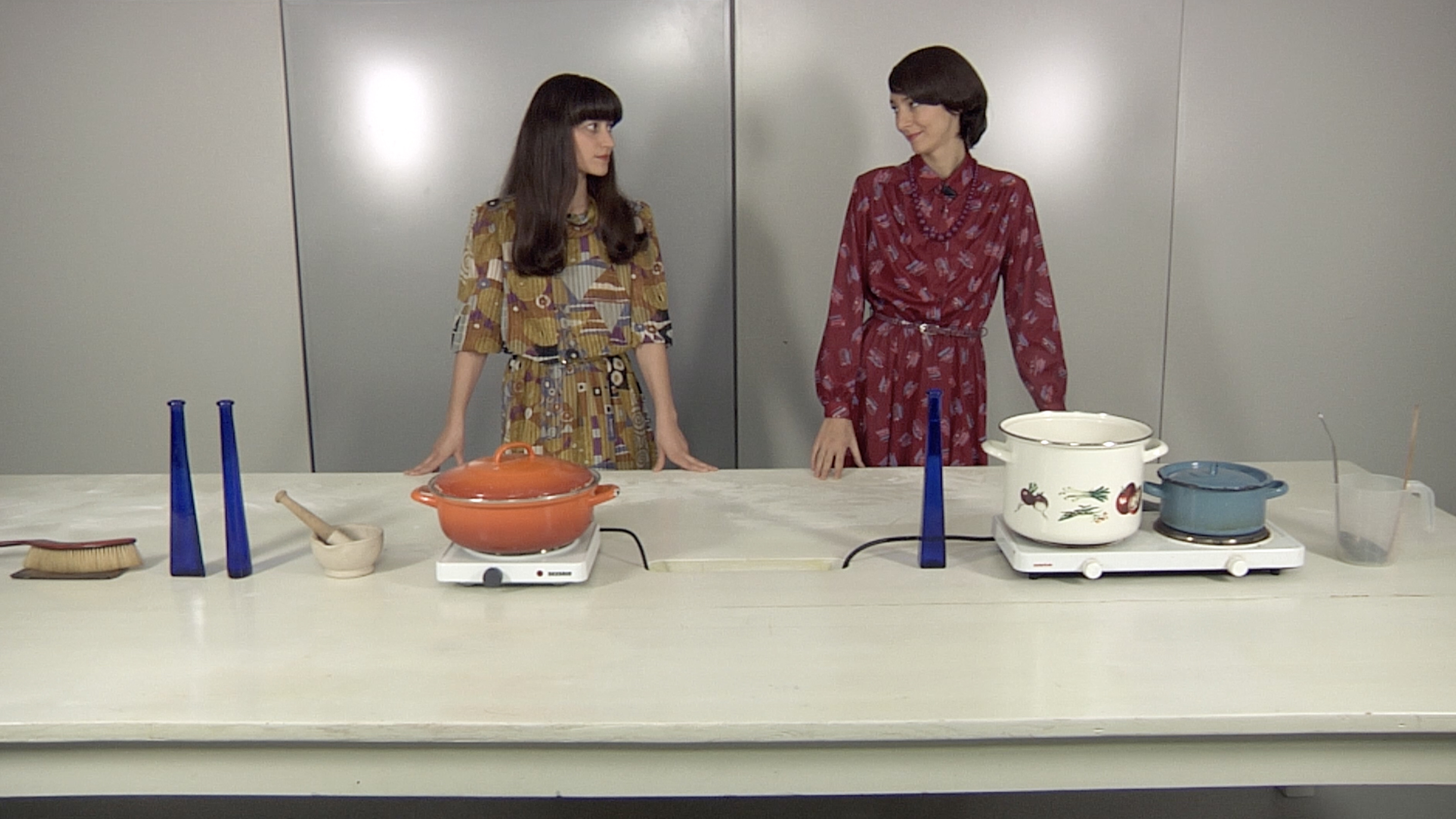
SEQUENCE 1
Scene 1.1
Irina: Good evening everyone and welcome to our show, this time on cosmic cooking. We were reading an article in the paper the other day by Alton Brown and he was saying that he thought that molecular cuisine, that is so fashionable at the moment, is the curse of the times we live in. Well, we're inclined to agree with him and it is nice now and again to get back to a good old-fashioned cooking, and that's what we are doing today.
Scene 1.2
Alina: We’ll share with you our most secret recipes, our confidential ingredients and most importantly, we'll tell you about some mystery techniques for a successful cooking of the past and of the future. For this purpose we take our inspiration from old masters of cooking, that's why what you will see today will be nothing spectacular, it will be nothing over the top, nothing bombastic. It will be just like everyday cooking, what everybody does in their own kitchen. And we'll experiment with this. Everything that we will do today you may have seen before or you may have done before but I'd like you to see it again because it's such a winner, it's so easy and so delicious and no one could ever believe that something so easy can have cosmic effects. People don't ever think of expanding this everyday banal cooking into a more universal experimentation, into a kind of mixing and blending of cosmic ingredients. And if you may allow..
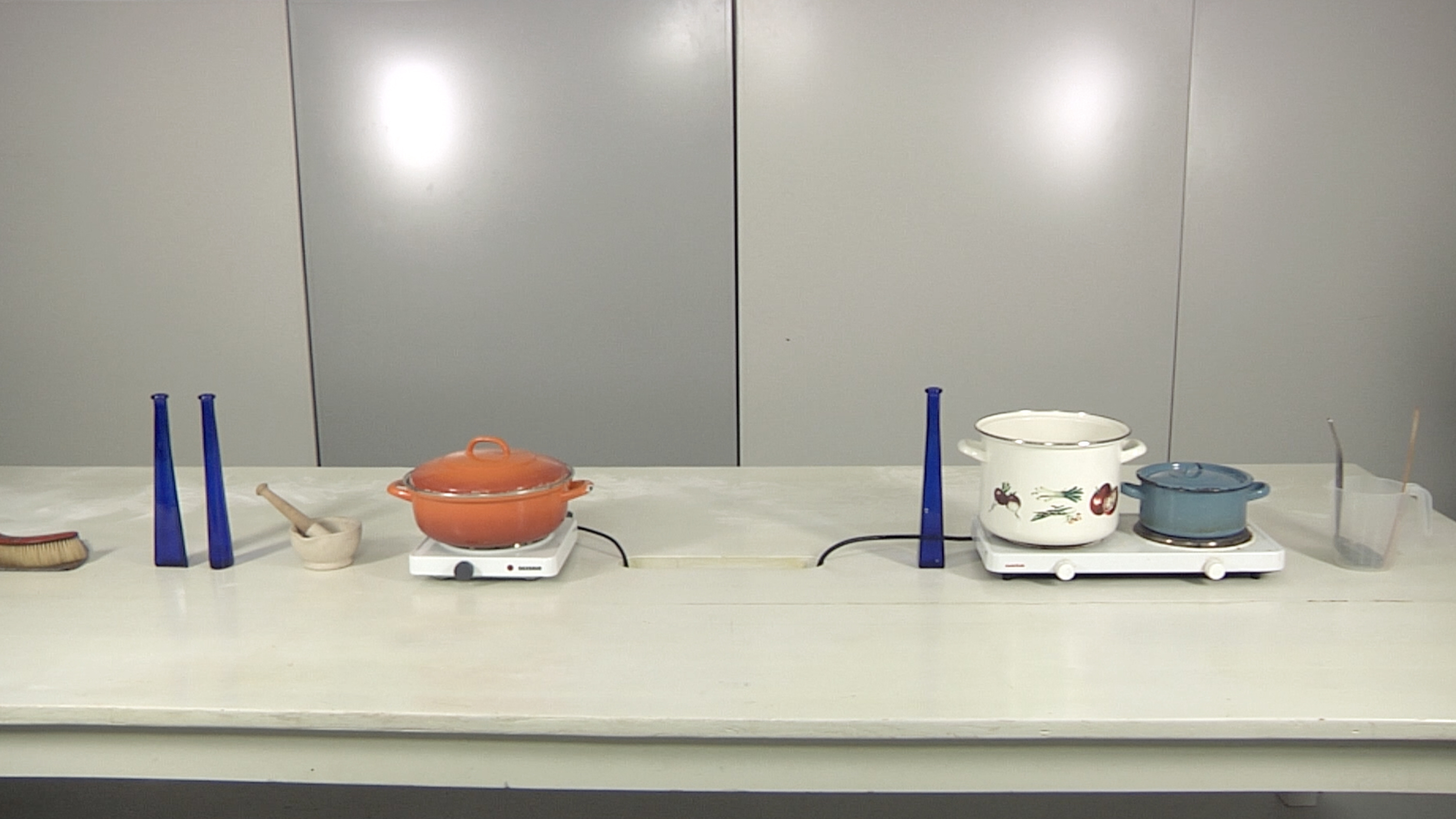
Alina takes the blue bottle from the table and pours water from it into the large white pot. She then takes the lid off the smaller blue pot and uses the ladle placed nearby to transfer some water from the blue pot into the white one. Then she puts the lid back on.
Scene 1.3
Irina: Yes, that is our main question today: that maybe it is not just our dinner - your dinner - that is being cooked, but maybe it's the whole world that is being cooked.
Scene 1.4
Alina: And maybe it's also not we who are cooking but we who are actually being cooked.
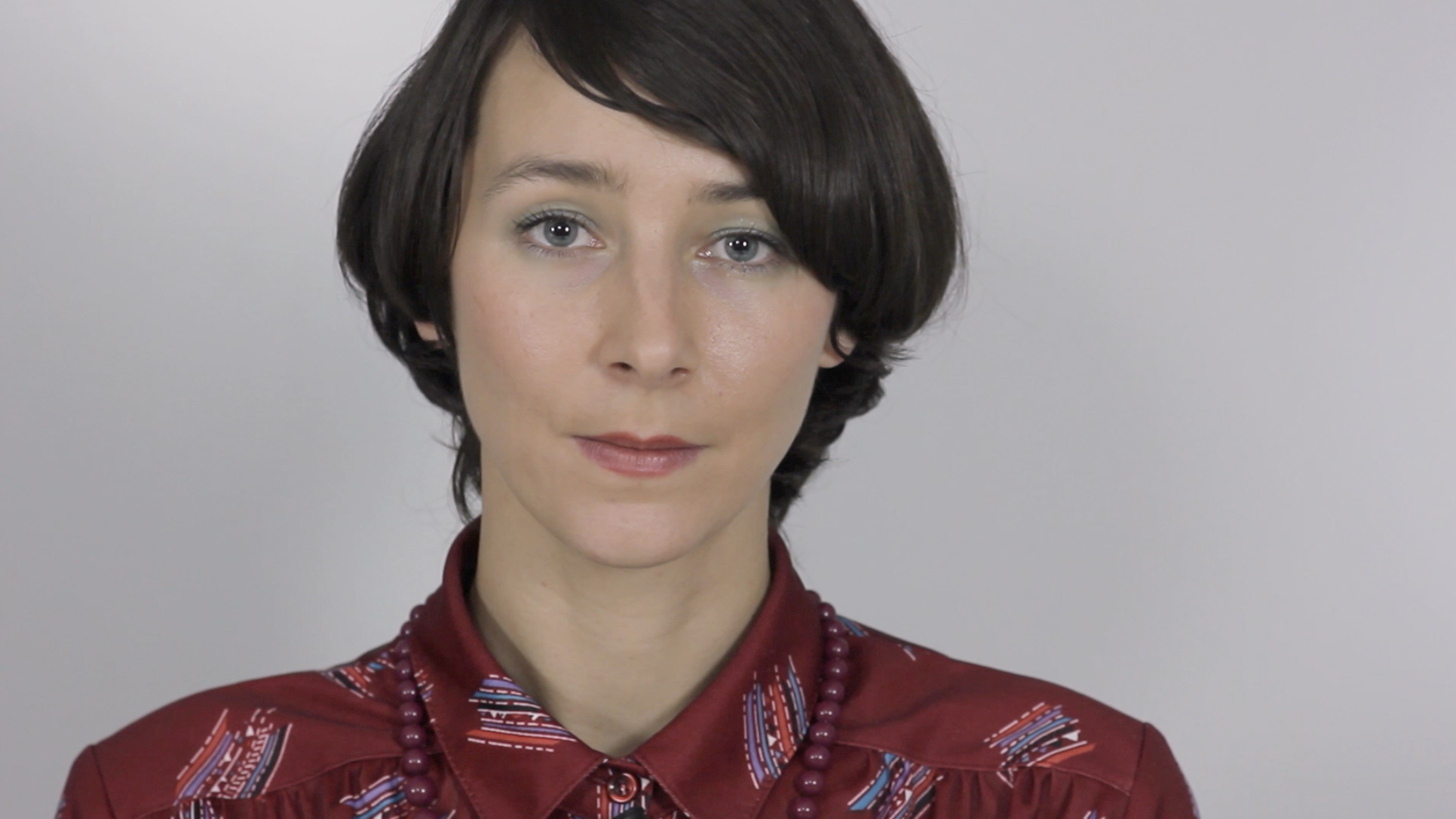
Scene 1.5
Irina: Did you ever realise that you can cook your own thoughts?
Irina lifts the lid off the large orange pot. Close-up of steam coming out
Scene 1.6
Alina: Or that your own thoughts are cooking you?
Scene 1.7
Irina: How do you incorporate your emotions in the food that you are preparing? Because we cannot speak only about thoughts, we have to speak about emotions as well, so how do you incorporate your emotions in the food that you are preparing every day? And for this we’re going to show you a little trick.
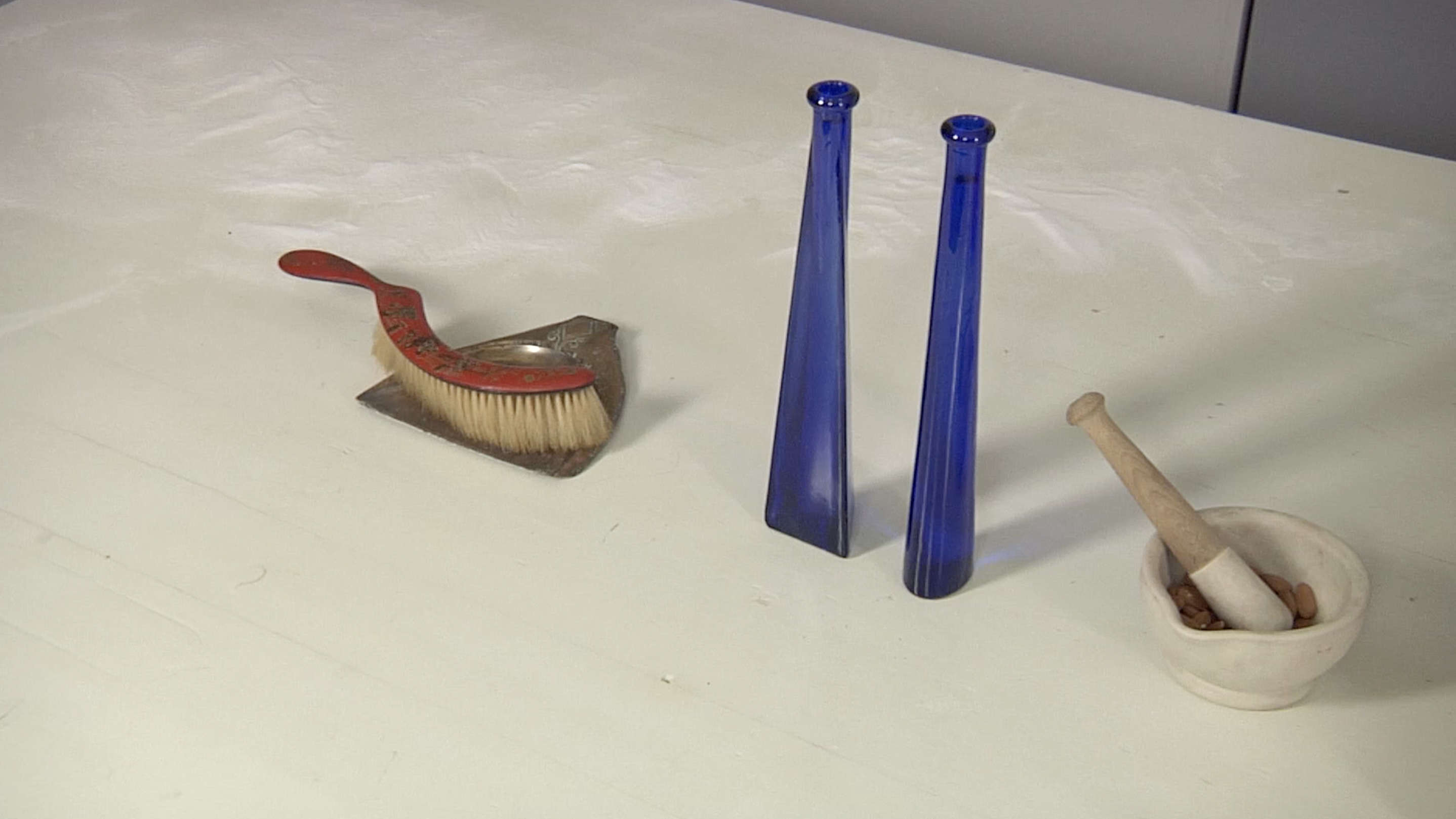
Irina puts the lid down and starts sweeping the salt on the table with the small metal brush.
Scene 1.8
Alina: Yes, we are now going to add the first ingredient for our dish today which would be salt from yesterday's sweeping. You know, we swept a lot yesterday above this table and we are going to gather all this salt which will hopefully make a perfect dish.
Irina: I just wanted to interrupt you for a second, we wept yesterday, not swept. We are sweeping right now.
Alina: Oh, this is embarrassing. I always mix up these housewife activities. We never know if we are sweeping or weeping.
Irina sweeps the salt, collects it on the pan, puts it in the orange pot, puts the lid back on and gets back to her original position
Scene 1.9
Irina: So I hope this will contribute to our dish today, and we strongly recommend you use this trick every time you are cooking at home. You are probably wondering at this stage: well, can’t I use regular salt? Well... you can use it of course if you like, but I always prefer salt from the tears. If you haven’t got any I give you permission to use it, as long as you don’t waste any tears when they do come along.
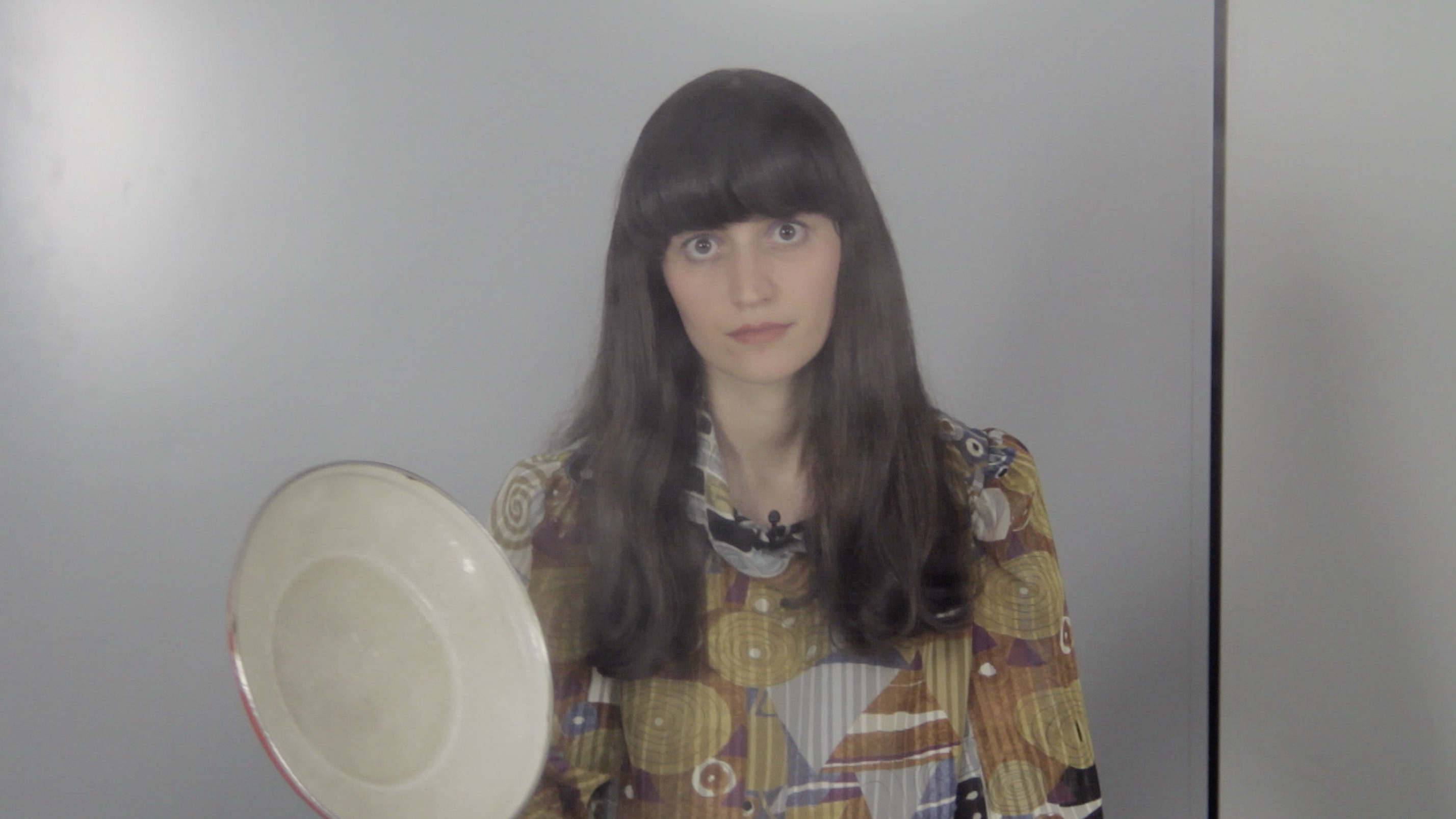
Scene 1.10
Alina: But to get back to our dish today we have here two cooking plates and three cooking pots and we are boiling some water. In this pot over here, the water is boiling very intensely; in this pot here the water will boil towards the end of our cooking show and here, let me see, the water is boiling rather mildly, I would say.
Scene 1.11
Alina: Have you ever boiled with anger? The way we boiled yesterday, to gather all these tears.
Irina: And have you ever boiled with love, because boiling with anger is quite common but what about boiling with love? And this brings us to the secret ingredient of our cosmic cooking.
Well, a lot of people are always asking us: what do you put in the food you give people when they come to supper with you? And the answer that we always give, or invariably give is… love.
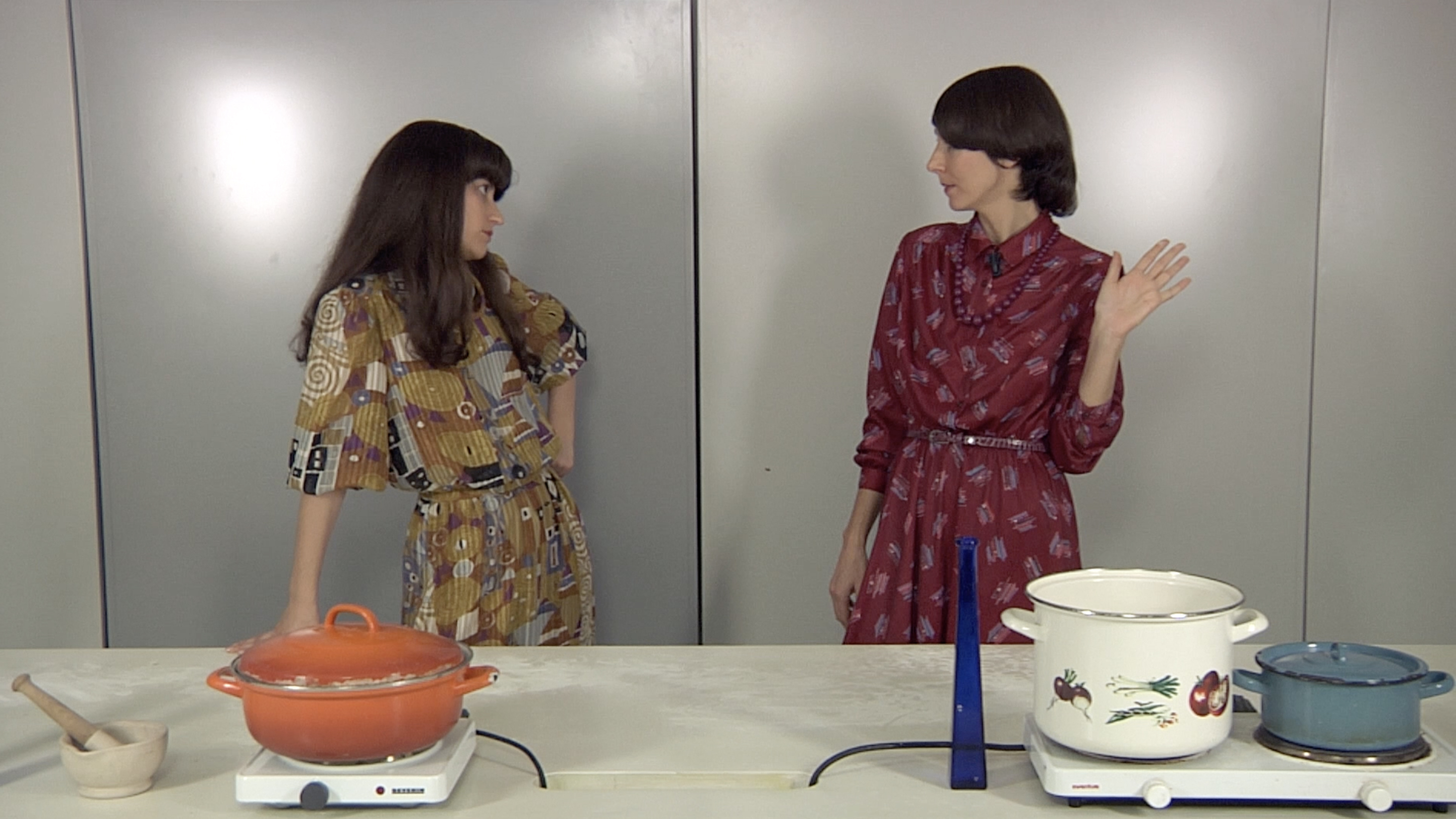
SEQUENCE 2
Scene 2.1
Alina: No, it's not love!
Irina: But it is, we talked about it so many times. What do you mean it's not?
Alina: No, it's not love. Love is something immaterial and what we are doing here is something very material.
Let me give you an example that all the people that are watching us will surely understand. Have you ever seen these people wearing these rings…
Irina: Rings?
Alina: Yes, these rings on their fingers, engagement rings.
Irina: Now this is getting a bit embarrassing. What's the connection between an engagement ring and cooking?
Alina: But let me finish. Respectable people wear these engagement rings.
Irina: I can't see any ring on your finger; you don't have any.
Alina: I don't have it, but I'm waiting for it! And, to finish my point, please tell me what this ring is made of.
Irina: The question is not what it is made of - and I'm sure everybody who is watching us now will agree with me on this point. The question is more what it is.
Alina: And what do you think it is?
Irina: Love
Alina: Gold
Irina: Love
Alina: Gold
Irina: Love
Alina: Gold
Irina: So you're waiting for the gold, not for the love!
Alina: Yes!
Irina: So you are materialist. I knew it, but now I'm having my final confirmation.
Alina: And you are what?
Irina: I don't know what but you are materialist.
Alina: And you are idealist.
Irina: Well I prefer to be idealist than materialist.
Alina: But you don't know anything about materialism.
Irina: I know perfectly well. All these debates about materialism. You think it's only cooking, but it's everywhere. In philosophy it's the same. Materialism is everywhere, it's the new fashion, and that's exactly what you are following, the new fashion.
Alina: But do you think haute cuisine for example is just fashionable?
Irina: That's exactly what it is.
Alina: I think this is going too far.
Irina: I surely agree. And it's also a bit off topic.
Scene 2.2
Alina: Yes, maybe it's getting complicated, but one thing is sure and that is
Alina looks towards Irina and starts singing.
… that we are living…
in a material world.
And I am a material girl
You know that we are living
In a material world
And I am a material girl.
Alina and Irina stop singing and look at each other. After a brief pause, they continue to sing.
Living in a material world
And I am a material girl
You know that we are living
In a material world
And I am a material girl.
SEQUENCE 3
Love is the new gold.
Love standard instead of gold standard.
The alchemical imperative of capitalism.
Value is backed against affect.
Love as the attribute of the "ensouled" commodity.
Capitalism as "commodity animism".
Commodity with a soul.
Canned consciousness.
Aliveness merchandised.
Gold is a trade on love.
It is a fetishism of the soul.
Today's economy is an extractive economy.
Gold mining melts ecosystems.
Love mining exhausts affective powers.
Both love and gold are abstract.
They both aspire to a certain perfection.
Love is materialised in the erotic desire of the couple.
How to de-materialise it and make it vulnerable to chance?
Love as the embrace of the unexpected.
In the alchemical practice, gold fully materialised is dead gold.
It should never be completed.
Consumed.
Used up.
Alchemists don't spend their gold, neither do capitalists.
As Marx writes in the Grundrisse, gold "possesses all pleasures in potentiality".
SEQUENCE 4
Scene 4.1
Alina: Now we all know that cooking is the new alchemy. Cooking, just like alchemy, never ends. It goes on endlessly. It doesn't even end with food. And I want you to know that it doesn't matter what we cook but how we are cooked through our own cooking.
Irina: And to go back to the critique of molecular gastronomy that we mentioned at the beginning of our show, that is an anti-model for us, it's a closed system. There, nothing can go wrong and it has a clear endpoint which is human swallowing. But how can we leave room for chance? How can we embrace the unexpected inside the multitude of recipes and professional cooking methods?
Remember what the alchemists were saying about gold, that it should never be fully materialised? Well, we think it's the same with cooking.
Alina: To make our point we will use the example of the now familiar plum pudding. If you remember in our last show we cooked together a beautiful plum pudding.
Scene 4.2
Alina walks towards the flipchart while speaking. She starts drawing the atom models for sodium and gold.
Alina: We don’t normally like to be very technical because this can put people off cooking, but I thought it might be nice just to explain to you what sort of models you are likely to use when you are cooking a plum pudding.
Irina’s voice is audible off-screen
Irina: If you remember, the plum-pudding may equally refer to the first model of the atom proposed by J. J. Thomson in 1904. This is of course a very important step for our cosmic cooking. In this model, the atom is composed of negativity charged electrons surrounded by a positively charged soup, just like negatively charged "plums" surrounded by positively charged "pudding".
Alina: So we have here 11 electrons, or better said, plums. This could be Natrium contained in salt, respectively in a human tear.
Irina: What about our favourite element: gold?
Alina: For gold we need to cook a plum-pudding with only one plum. This is an old model, we will get to the new one as well which is kind of different, it's not a soup anymore. It is cosmic, or planetary we could say. But this is just a little teaser for our next show. As we were saying we are not afraid of being old-fashioned or going back to old recipes, so today we will stay with the plum pudding.
Scene 4.3
Alina walks back into the original frame from the flipchart.
Alina: Those of you who actually attempted to cook a very good plum pudding know that… for example, when you see a plum, what do you see in it? You see in it the potential of this plum to become the perfect plum pudding. This is what you see.
Irina: You reduce the plum to its possibility of being the plum pudding that ends up in your mouth, and this is precisely the point we want to make.
Alina: Especially since there are no plums in the plum pudding.
Irina: Exactly.
Alina: But again, those of you who tried to cook a plum pudding are also aware of how many things can go wrong - that is to say, how hard one must work to make the pudding not too watery and not too dry, not too hard not too soft.
The professional on the other hand can make 60 puddings at a time, and does so by eliminating chance as much as possible. In a very inspiring book that we found it is said about the professional: he or she operates the ultimate ontological distortion, the most complete closing of the system.
Irina: In the same way by doing the show today, we actually close it down. That's why we were thinking of not doing it at all, which for the cooking might have been better because it's the only way to preserve its potential, its flavour, so to say.
Alina: So we have one advice for you and that is: Give up recipes!
Irina: And why? We go back to our friend from the book that we found… And there he mentions this very popular quote: "We don't know what a body can do".
Alina: Spinoza!
Irina: You surely have a book of aphorisms at home. Go right now and look it up under Spinoza. You will find this quote for sure: “We don't know what a body can do.” But a body is in many cases is a human body, and for a cosmic cooking we thought it would be much more important to talk about the plum instead. So we have a motto for today, and our motto is:
Alina & Irina: We don't know what a plum can do.
Irina: So we strongly advise you that whenever you are cooking, you try and not close the system. As we did today by being here in front of you. And we apologise for that. But we will try to compensate for this little mistake.
Alina and Irina leave the set, each on one side.
SEQUENCE 5
Voices audible off-screen
Alina: And we can think of expanding this idea, now that we are not stressed with the perfect dish anymore. So we could think for example of how to acquire taste without spices and how could we also get nutrients without food?
Irina: You know, there is a Romanian saying, that one is “getting drunk on water”.
Alina: On cold water. And there are many famous people, maybe you have heard of them, like Henry Miller for example who suggests getting soused on water, and William Burroughs, who tries thinking the possibility that things usually attained by chemical means are also “accessible by other paths”.
Irina: So I'm hearing from my colleague that we don't have much time left. We have a short conclusion to make and I want to read it not to get it wrong. In cooking this is about over-the-pot confidence in obtaining the unobtainium, an ultimate unknown food. You know it is very much like alchemists surpassing what they thought of as the natural stages of matter.
Alina: But for sure we might be getting drunk on water, I mean on boiling water in this very moment! So goodbye for now!
Irina: See you next time!